
The 15% U.S. Tariff: A Reminder of Our Structural Exposure
Limited direct exposure, but indirect fisheries risks remain.
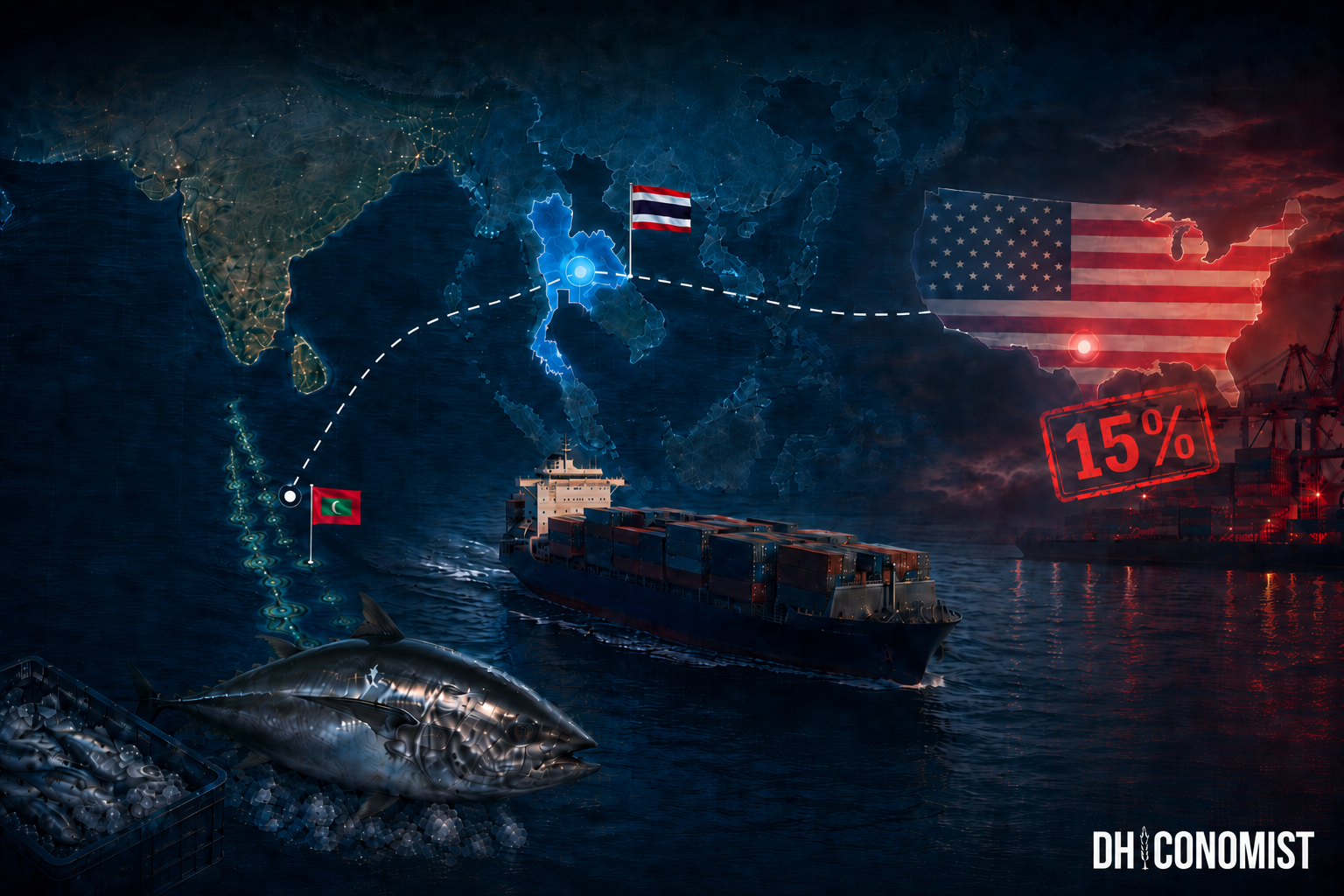
The United States’ decision to impose a 15% tariff on a broad range of imported goods, including seafood, has sparked understandable discussion across trading nations. For the Maldives, however, the immediate question is not whether we are directly affected — but whether we are indirectly exposed.
On the surface, the numbers are reassuring.
Maldives’ direct merchandise exports to the United States stood at approximately **USD 836,000 in 2024**, representing less than **1% of total goods exports** (UN Comtrade data). The United States also accounts for roughly **2.27% of total tourist arrivals**, according to national tourism statistics. In macroeconomic terms, direct exposure is minimal.
But the more important story lies beneath the surface — in our fisheries value chain.
Fish remains the backbone of Maldivian merchandise exports. In 2024, the Maldives exported approximately **USD 48.8 million worth of fish products to Thailand**, out of total goods exports of around USD 90–95 million. In other words, **Thailand absorbs nearly half of our merchandise exports**, making it the dominant buyer of Maldivian raw and frozen tuna.
Thailand is also one of the world’s largest processors and exporters of canned tuna. The United States represents one of its major destination markets. Now, with a 15% tariff imposed on Thai seafood exports entering the U.S., Thai processors may face reduced competitiveness or tighter margins in that market.
When the dominant buyer of our raw fish faces pressure in one of its key export destinations, the implications can travel upstream. Even if Maldives does not export directly to the U.S. in significant volumes, price adjustments can occur through procurement negotiations. In simple terms, when Thailand’s export margins shrink, the pressure can cascade backward to suppliers — including Maldivian fishermen.
This does not mean a crisis is imminent. Thailand’s seafood exports are diversified across multiple markets. The U.S. is important, but not exclusive. Much will depend on how much of Thailand’s processed tuna is U.S.-bound, how global demand adjusts, and whether alternative markets absorb the supply.
However, this moment serves as a structural reminder.
The Maldives is not vulnerable because of direct trade with the United States. We are exposed because of **concentration risk** — reliance on a single dominant buyer within our fisheries export chain. When nearly half of merchandise exports flow to one country, external shocks affecting that buyer inevitably carry transmission risk.
The appropriate response is neither alarm nor complacency. It is strategic clarity.
Greater domestic value addition, expanded processing capacity, diversified export markets, and strengthened branding of Maldivian sustainable tuna are long-term economic priorities. Reducing dependency on a single processing hub enhances resilience.
For now, the 15% tariff is unlikely to materially disrupt the Maldivian economy. But it underscores an enduring economic principle: in a globalized supply chain, indirect exposure can matter as much as direct trade flows.
Advertisement
In-Article

Dhiconomist
Contributing writer at Dhiconomist covering economic policy, business, and financial markets in the Maldives.